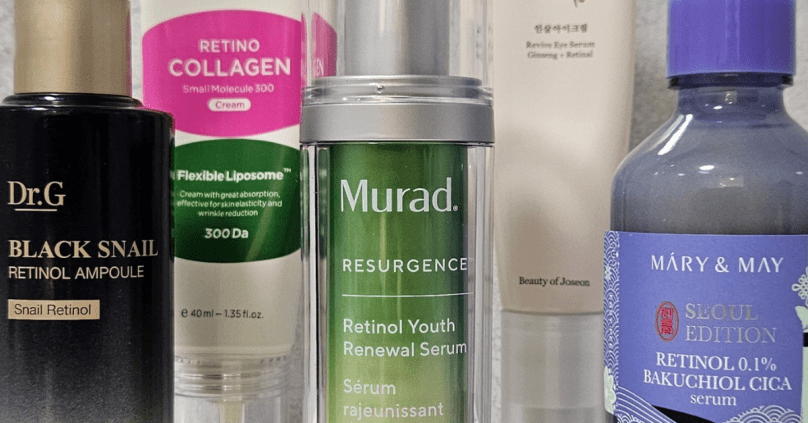
Retinol is a type of vitamin A that forms part of the retinoid family and is the most commonly used, as it is better suited to sensitive skin.
Retinol helps to accelerate cell turnover, boost collagen production, and smooth and even out skin tone. A stronger version is Retinal, which acts up to 11 times faster than Retinol and can be more effective at treating more severe signs of ageing.
What are the benefits of Retinol?
Retinol promotes skin cell regeneration, which makes this a powerful skincare ingredient that can help with skin concerns such as acne, blemishes, signs of ageing, and dull skin.
- Acne & Blemishes: Retinol helps to exfoliate skin, unclog pores, and prevents further build-up. This will, in turn, reduce breakouts and allow your skin to breathe.
- Anti-Ageing: Retinol helps to boost skin cell turnover, preventing the breakdown of collagen and reducing the formation of deep-set wrinkles, so that skin looks more youthful.
- Healthier Looking Skin: Retinol works at a deep, molecular level to increase skin cell turnover and can therefore, improve hyperpigmentation, age and sun spots, pore size, and generally give you a smoother and brighter complexion.
Are there any precautions?
As with many skincare products, not everyone’s skin will react the same – so it is always important to listen to your skin. When starting out with using Retinol, it is a good idea to start slowly by applying a pea-sized amount to clean, dry skin once or twice a week and gradually build it up to daily use.
Here are just a few side effects that you may experience when using Retinol and ways you can possibly prevent them:
- Dry or Tight Skin: Retinol helps to accelerate the turnover of skin cells, which can result in your skin’s natural barrier not being able to hold as much water as it’s used to. This results in your skin feeling dry and/or tight. To overcome this, you could consider changing your moisturiser to one that contains hydrating ingredients such as hyaluronic acid, ceramides, or glycerin.
- Blemishes: Retinol is great at unclogging pores, which is one of the main reasons for acne, but you may notice that you are getting more spots when you start using a Retinol. Generally, this is fine. Your skin is most likely purging and could do this for a couple of months. Just stick with it, as your skin most likely just needs a little more time to adjust before you’ll see clearer skin.
- Sensitive to Sun: When using Retinol, your skin will be a lot more sensitive to the sun due to new skin cell turnover. Whether you use Retinol as part of your morning or evening skincare routine, it is super important to use sun cream, and make sure you reapply it throughout the day.
Introducing Retinol into your skincare routine
Retinol can be included within your skincare routine in many ways, but it is always important to start off gradually and slowly increase how often you use it. And always use an SPF!
- Serum: Once your skin has been cleansed, you can apply a Retinol serum underneath your moisturiser every morning and evening. The Paulas Choice Intensive Wrinkle-Repair Retinol Serum is a silky, rich formula that leaves skin smooth, hydrated, and radiant-looking
- Moisturiser: Applied to the skin after using a serum, again, every morning and evening, The Paulas Choice Ceramide-Enriched Firming Moisturiser contains powerful ingredients to fight the signs of ageing, helping to rebuild the skin’s natural barrier.
- Eye-Cream: If you want to visibly reduce fine lines and restore radiance to the eye area, then adding in good eye cream to your skincare routine will help. The Paulas Choice Ceramide-Enriched Firming Eye Cream moisturises and strengthens the delicate skin around the eyes, making the area look firmer and healthier.
- Bodycare: You can also include Retinol into your bodycare routine and the Skin-Smoothing Retinol Body Treatment from Paulas Choice will hydrate and firm skin as well as even out skin tone.
Sources
Janeca Racho. The Different Types of Retinoids and How They Benefit Your Skin. Last accessed 30 January 2025. https://www.dermstore.com/blog/types-of-retinoids-benefits/
Medik8. Retinal vs Retinol: Which Is Better For Your Skin? Last accessed 30 January 2025. https://www.medik8.com/pages/retinal-vs-retinol-which-is-better-for-your-skin
La Roche-Posay. What is Retinol? Last accessed 30 January 2025. https://www.laroche-posay.co.uk/en_GB/what-is-retinol.html
Dr. Ramtin Kassir. Should you Moisturize After Retinol? Published June 27. https://www.drkassir.com/blog/heke670evujo8jv7oq4ycr2ir75olr
Cleveland Clinic. Retinol. Last accessed 30 January 2025. https://my.clevelandclinic.org/health/treatments/23293-retinol
 Reviewed by Hanna